Scott’s “Period of Furies”
The Shrinking ManScott’s “Period of Furies” names a phase in which his response to his shrinking hardened into relentless, mounting anger. The fury was not simply indignation: Scott understood it as anger fueled by fear and by his powerlessness, capable of turning ordinary disagreements into destructive confrontations. Its force is clearest in the contrast between the man he was during the period and the later Scott, who describes his remaining anger as only a remnant of what he once endured.
Anger and the Newspaper Offer
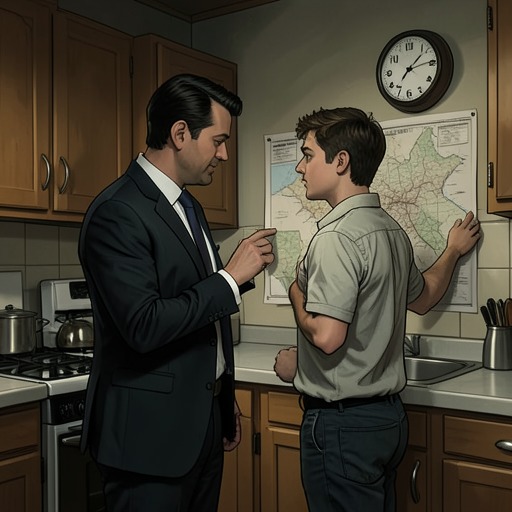
During this period, Scott refused a newspaper offer that could have brought badly needed money to his family. He rejected the prospect of becoming an object of public curiosity, but his refusal was entangled with the financial strain they were already facing. When Louise Carey did not support his decision as enthusiastically as he expected, he turned his frustration on her: “What would you like me to do, turn myself into a public freak to give you your security?” He knew even as he spoke that the anger was misdirected. The episode shows the fury working less as a considered position than as an immediate defense against fear, with the cost of that defense borne by someone close to him.
Scott’s response to the offer also gives the anger a public dimension. The newspaper represented an unwanted transformation of his affliction into spectacle; refusing it preserved his resistance to that exposure, but did nothing to relieve the family’s need for money. His choice therefore brought no clean victory. The same pressure that made the offer feel intolerable also sharpened the domestic conflict around refusing it.
Suspicion and Domestic Conflict
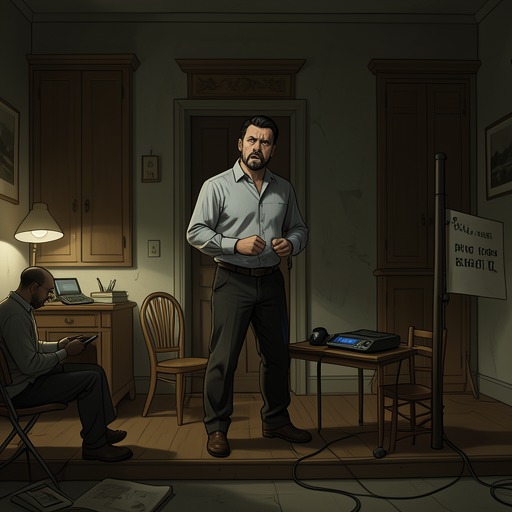
The fury also made Scott lash out at people he believed were mocking him. He later recalls an argument with Terry, who he thought had said something behind his back. No taller than Beth at the time, he whirled on Terry and insisted that he had heard her. When she denied speaking about him, he accused her of lying and treated the exchange as proof that she had insulted him. The quarrel escalated into competing claims of authority and resentment, then continued in what the narration presents as shrill, discordant, and futile argument.
The scene exposes how shrinking altered the stakes of social encounters without confirming Scott’s suspicion. He reacts to what he thinks he heard as though the insult were certain, and his anger overwhelms the possibility of resolving the misunderstanding. His later recognition that the temper was “off-target” makes the memory more than an account of other people’s hostility: it records how fear distorted his interpretations and pulled those around him into conflicts that achieved nothing.
Remnant and Retrospective Meaning
The period is presented retrospectively, through Scott’s distinction between the fury he once lived with constantly and the smaller trace of anger he feels later. That difference marks a change in intensity, not evidence that the circumstances behind his anger have disappeared. The remembered scenes instead show the period’s recurring pattern: threatened dignity, a quick assumption of ridicule, and an outburst whose force exceeds its cause.
As a name for this stretch of his experience, “Period of Furies” captures both its persistence and its plurality: anger recurs across the newspaper refusal, the confrontation with Louise Carey, and the dispute with Terry, taking different forms but repeatedly turning fear outward. Scott’s awareness that he had misdirected his anger does not undo the damage of the quarrels; it makes the period legible as a struggle in which the shrinking afflicted his sense of security as well as his body.